Where Are Recommender Systems Heading Next?


Recommender systems rely on signals such as clicks, viewing history, purchases, and skips to predict what people might like. But past behavior only tells part of the story. It doesn’t always reveal what someone wants right now, why their interests change, or how much control they want over what they see.
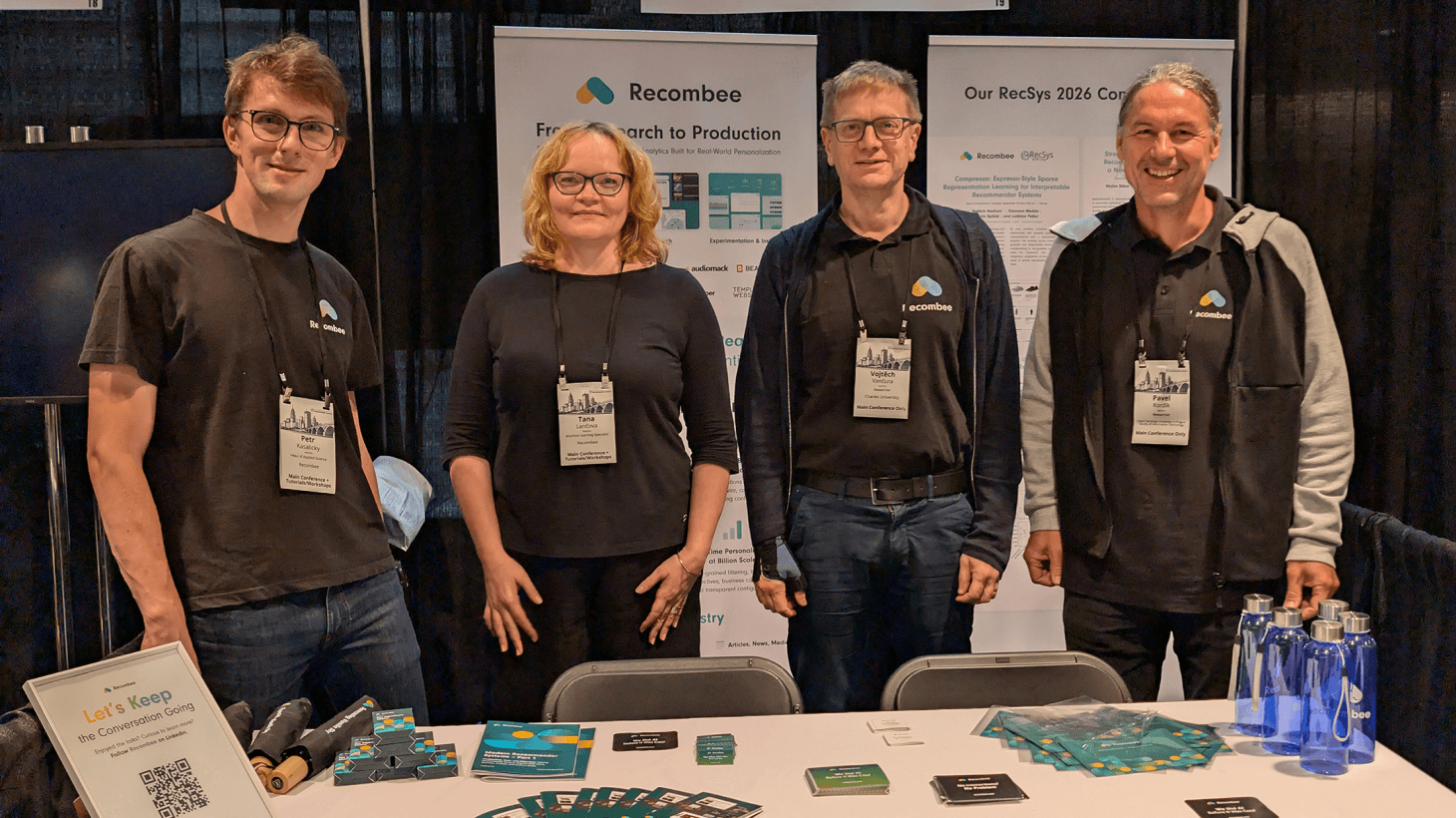
At ACM RecSys 2026, these questions were central to the future of personalization. This year, Recombee contributed five accepted papers, with three accompanying technical demos showcasing the research in practice. Together, they explored how recommendation systems can better understand content, adapt to users, and operate reliably in real-world settings.
Here are three themes connecting our research.
1. Better Recommendations Start With Better Understanding
Recommendation quality depends on how well a system represents both users and the things they might be interested in. But general-purpose AI models don’t always capture the distinctions that matter within a specific domain.
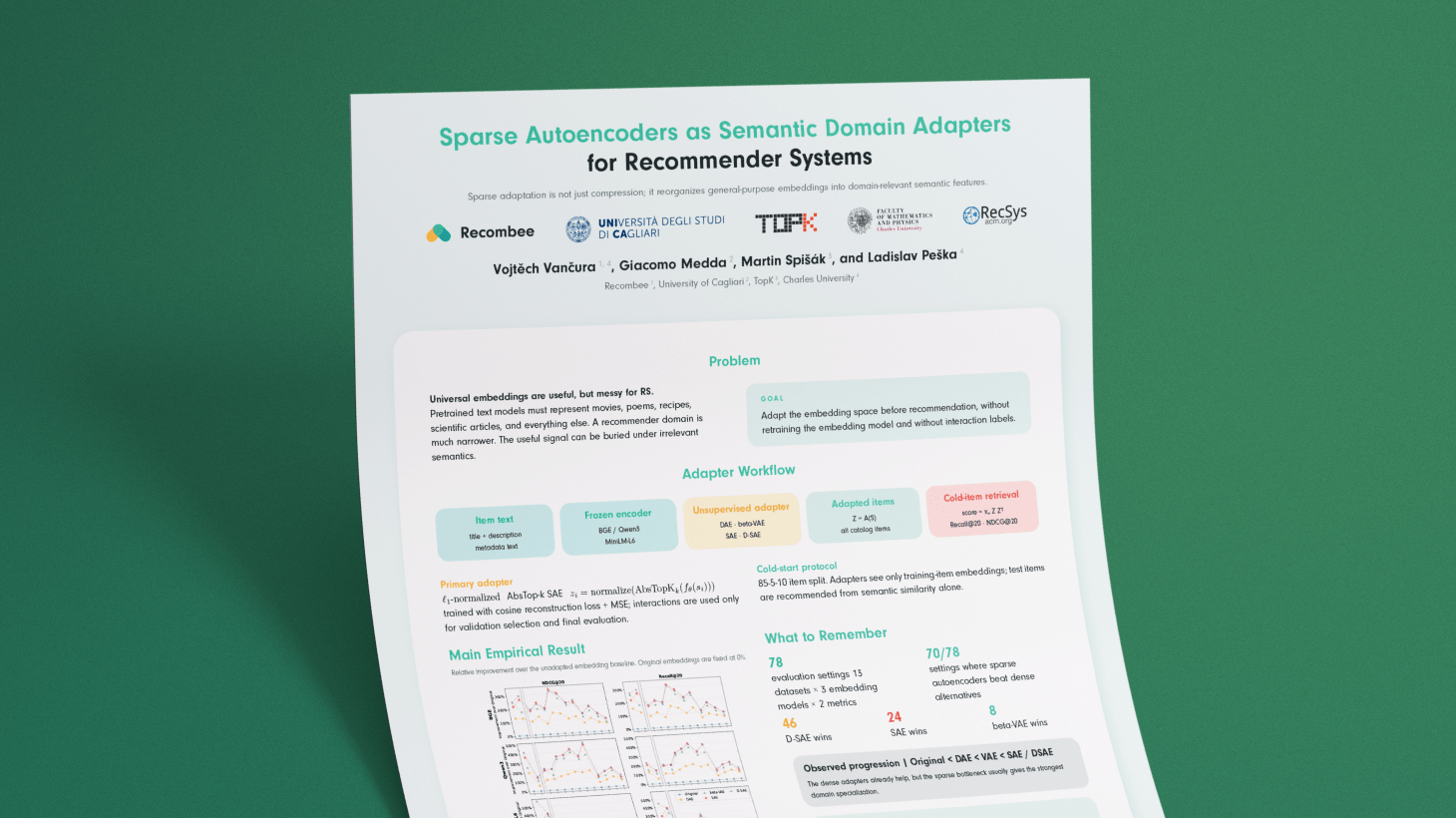
In Sparse Autoencoders as Semantic Domain Adapters for Recommender Systems, our research team explored how sparse autoencoders can adapt pretrained text embeddings to specific recommendation domains without retraining the underlying model or requiring interaction data for training.
Across 78 evaluation settings, the sparse autoencoder variant achieved the best result in 70. The findings suggest that lightweight adaptation can help general-purpose representations capture more useful, domain-specific concepts.
The takeaway: better personalization doesn’t always require a bigger model. Sometimes, it means making existing representations more useful for the task at hand.
2. Personalization Should Give Users More Control
Most recommendation systems learn from implicit feedback: clicks, views, purchases, and other behavioral signals. These are useful, but they don’t always capture what someone wants to change.
A person might want fewer recommendations about a topic, more variety, or a different balance between familiar favorites and new discoveries. Systems need ways to respond to those preferences without relying entirely on past behavior.
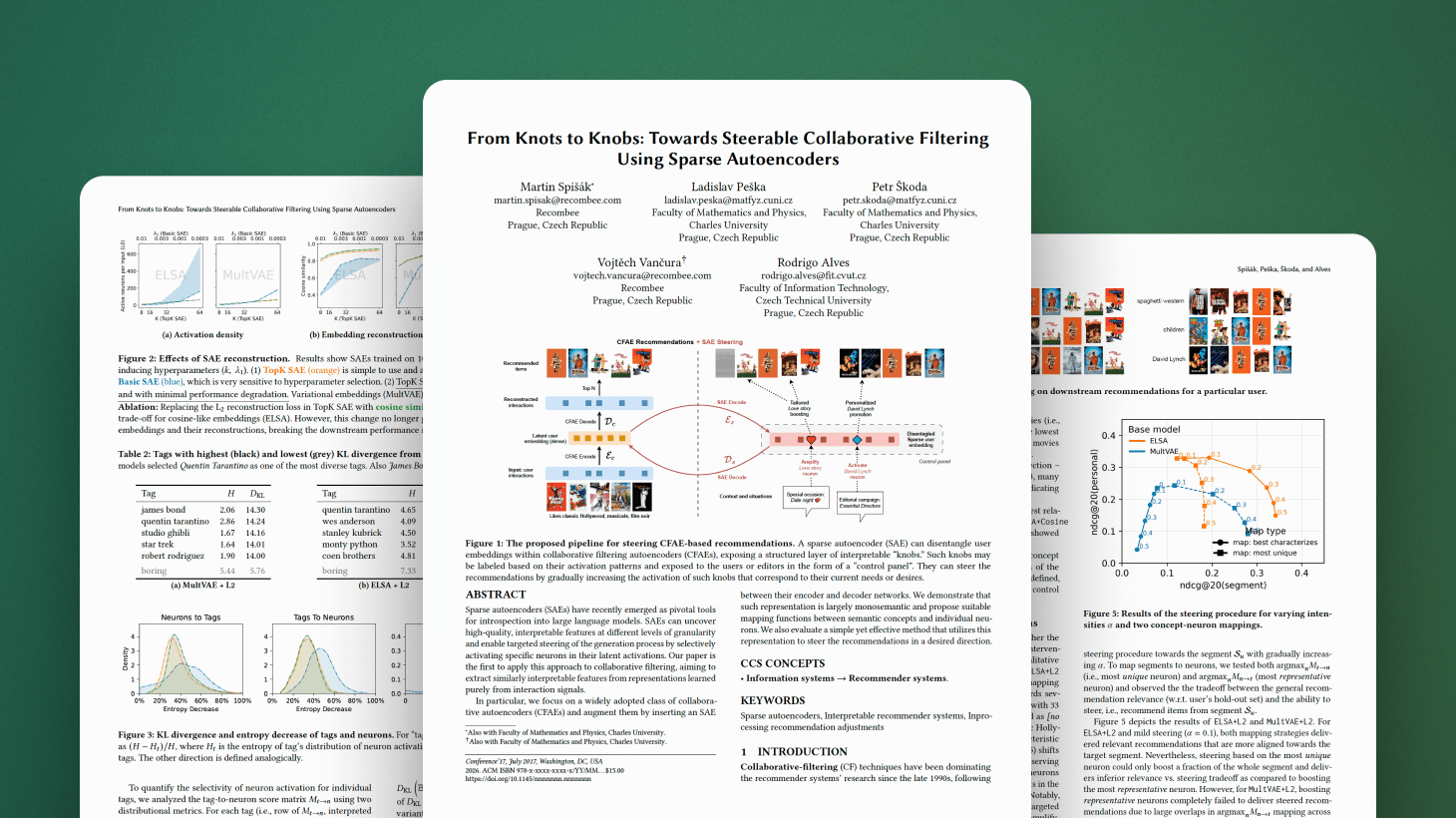
Our work on steerable collaborative filtering explores how users can influence recommendations in real time, using sparse autoencoders to support more direct control over personalized results.
This connects to a broader question for the field: how can recommendation systems remain adaptive while making it easier for people to express what they want?
The takeaway: personalization should not only learn from users. It should give them meaningful ways to guide the results.
3. The Next Frontier Is Intent, Alignment, and Control
As AI systems become more capable, recommendation is no longer just about ranking a list of items. It increasingly involves interpreting requests, responding to changing context, and deciding which signals should guide a result.
That raises new questions. Can a system distinguish a user’s immediate goal from their long-term interests? Can it adapt without overreacting to a single interaction? And can we evaluate whether its recommendations reflect what the user actually wants, rather than simply what the model predicts they will engage with?
These questions connect research into user intent, steerability, and alignment with the growing interest in agentic recommendation. They also make evaluation and control increasingly important as recommendation systems take on more complex tasks.
The takeaway: as recommender systems become more capable, understanding intent and keeping recommendations aligned with user goals become just as important as ranking accuracy.
From Research to Real Systems
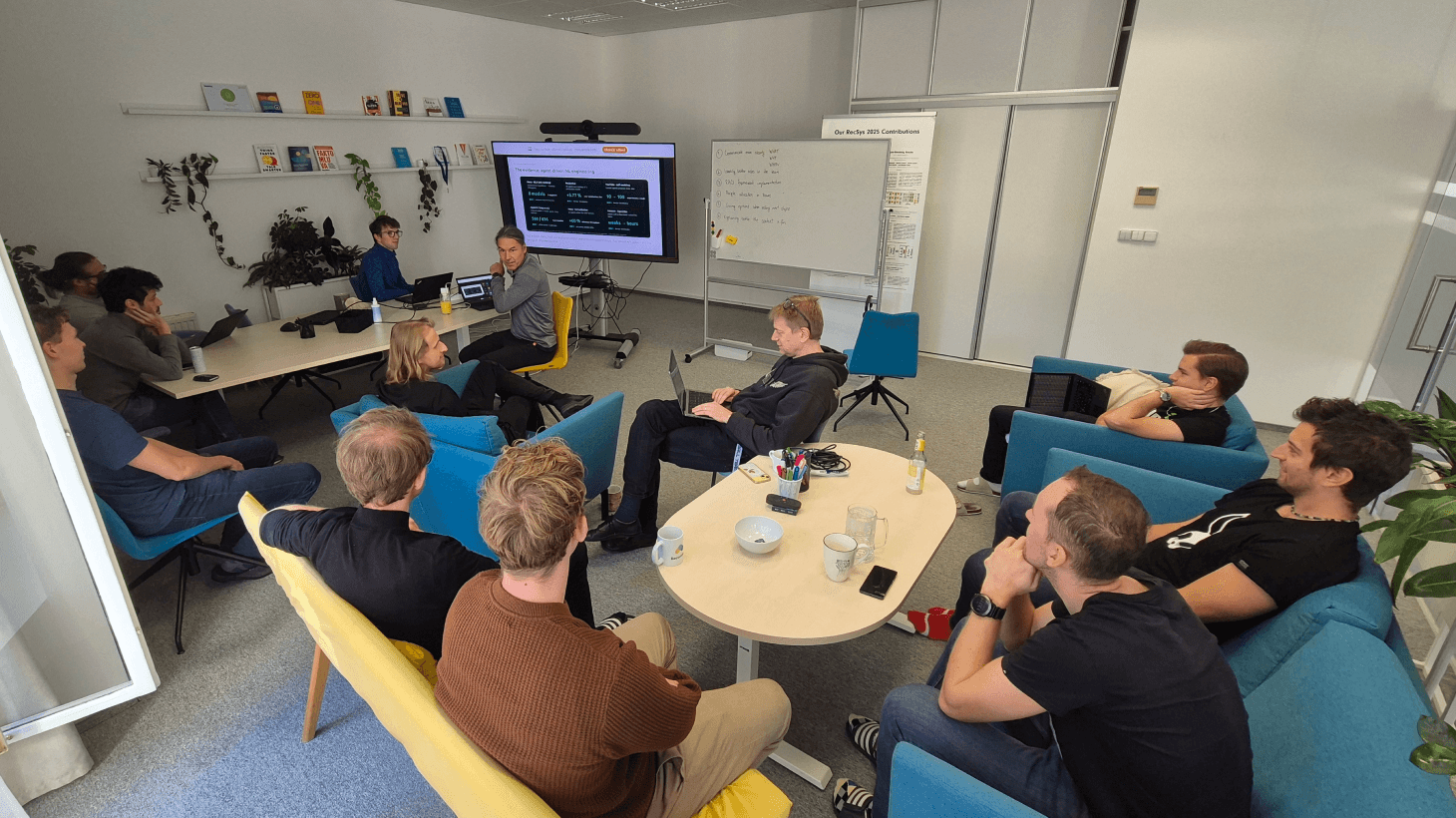
Alongside our five accepted papers, we showcased related technical demos that brought our research to life and created opportunities to discuss its practical applications with the RecSys community.
For us, that connection between research and implementation matters. Advances in recommendation are most valuable when they help address real challenges: understanding content more deeply, adapting to changing interests, and giving users greater influence over what they receive.
What Comes Next?

The next generation of recommender systems will need to do more than predict what people are likely to choose. They will need to understand what people mean, respond when their needs change, and make personalization easier to steer.
That means progress on several fronts: stronger representations, more expressive user feedback, better alignment, and evaluation that goes beyond clicks alone.
The goal is not simply to predict the next interaction. It is to make recommendations that better reflect what people actually want.
- Recommendation Engine
- Personalization